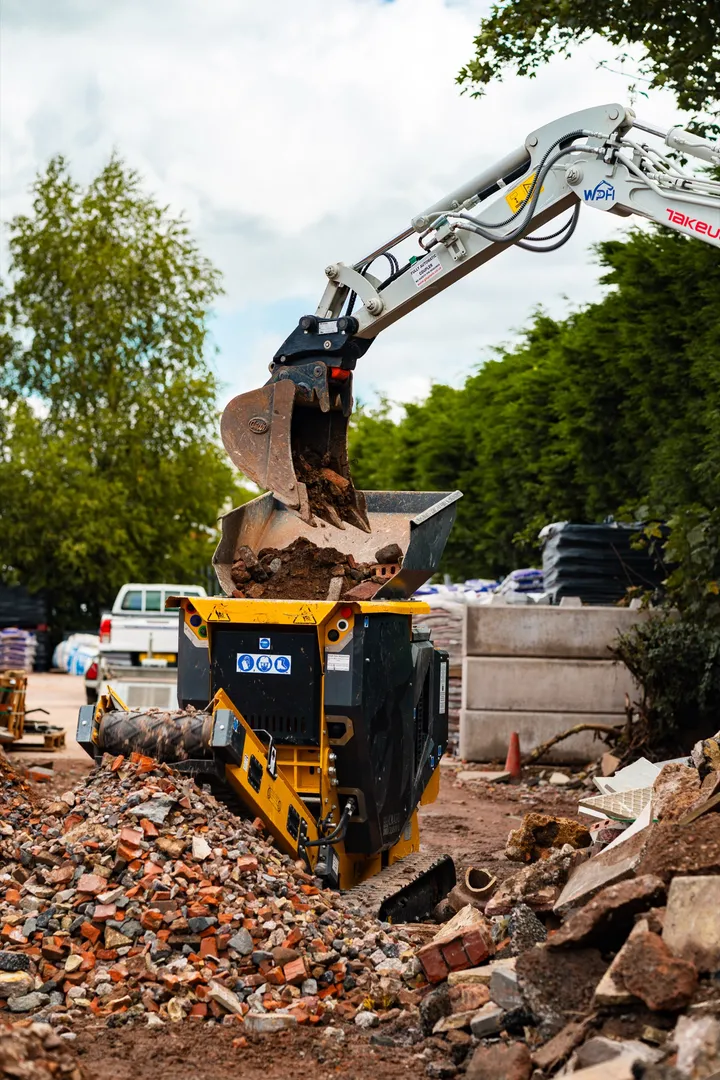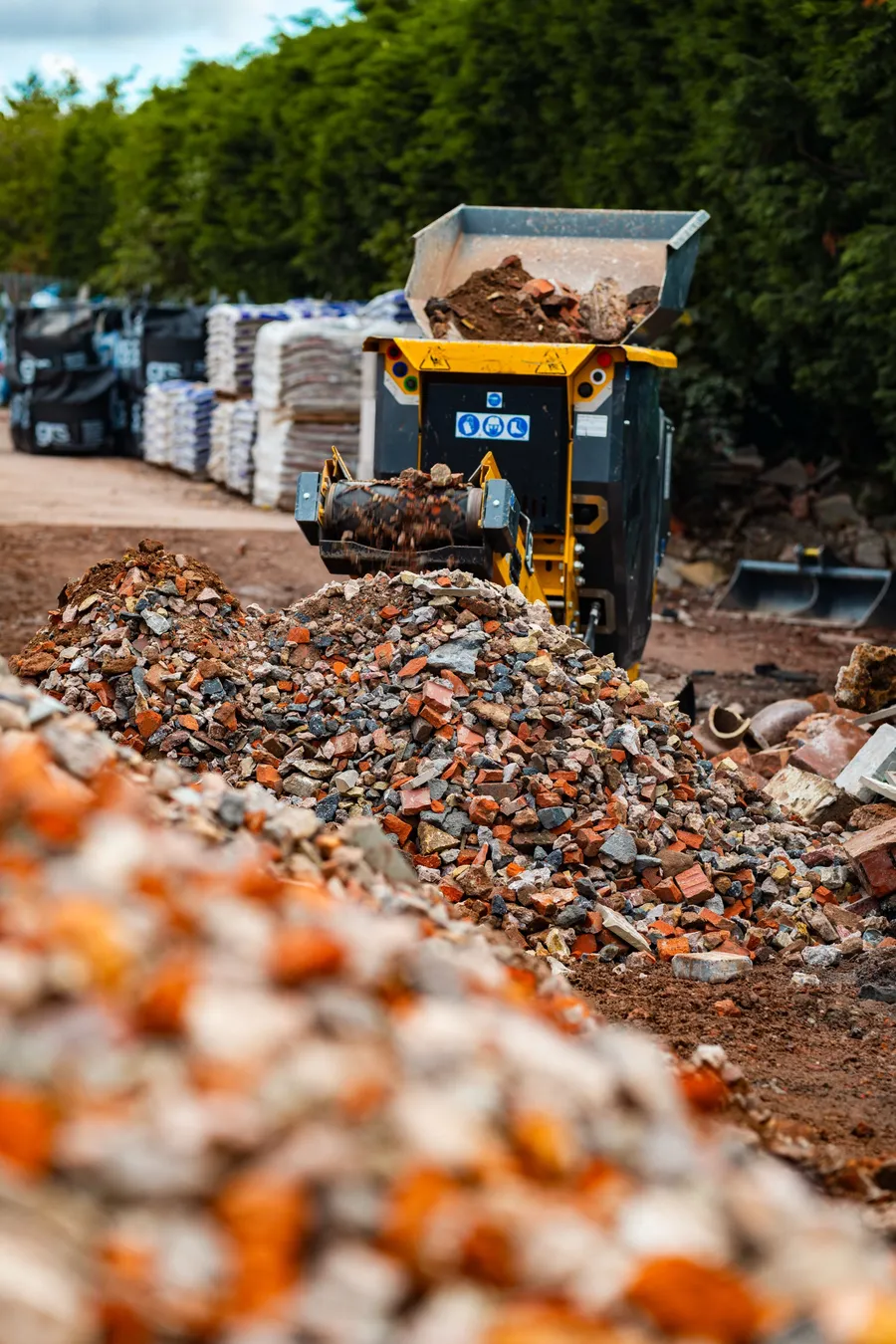
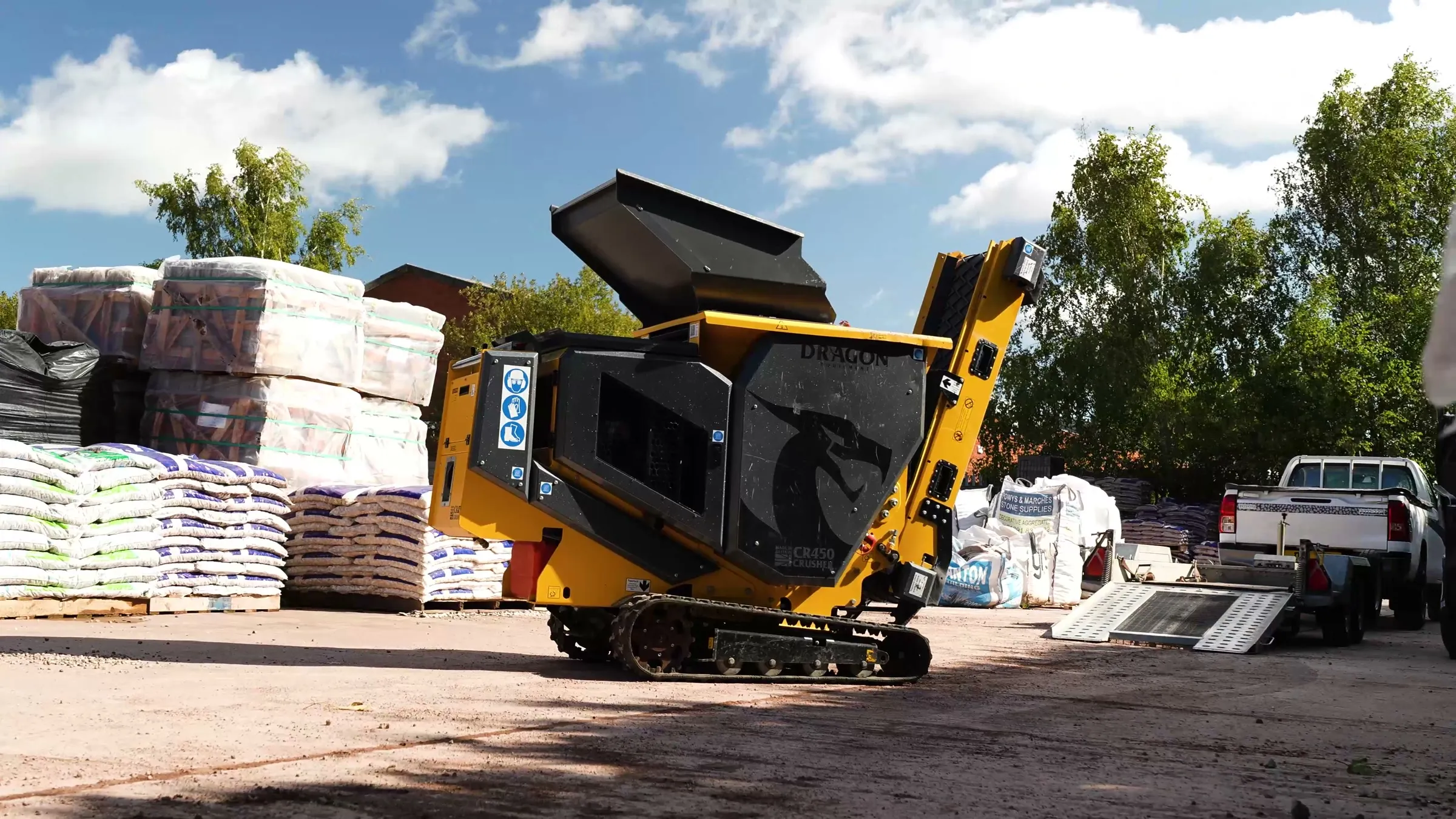
Yes, we deliver the Dragon Equipment CR450 to Wolverhampton. From our yard at Ford, west of Shrewsbury, it's about 39 miles: the A5 to the M54, off at junction 2 and down the A449 Stafford Road. We unload it, take you through the controls, and come back to collect it.
- From our yard
- About 39 miles · 55 mins
- Route
- A5 and M54 to junction 2, then the A449 Stafford Road
- Council
- City of Wolverhampton Council
- Waste regulator
- Environment Agency
Why is rubble such a constant in Wolverhampton building work?
The city has no room to spread out. The Wolverhampton Local Plan proposes 9,330 new homes to 2042, 97% of them on brownfield land, and no Green Belt release at all. Half are aimed at the city centre, with the rest spread across regeneration areas at Bilston, Wednesfield and Stafford Road and across existing neighbourhoods. Each of those plots carries something old on it: a factory floor, a car park, a row of garages.
Even that leaves a gap. The council's own evidence puts the need at 19,728 homes, so it has asked South Staffordshire and Shropshire for help. When land is that scarce, contractors reuse what is already on site. Breaking out a slab and feeding it through the CR450 gives you graded hardcore for the new build without a convoy of tippers through the ring road.
Which Wolverhampton neighbourhoods date from which era?
The oldest layer is Victorian. Whitmore Reans grew from the mid-1800s as a planned extension north-west of the town, along Newhampton Road and Dunstall Road, and Blakenhall's terraces cluster around the Dudley Road. These streets have small back yards, brick outhouses and boundary walls, and very little room out front for a skip. Many have been patched with concrete more than once, so a renovation can produce a surprising pile of mixed brick and slab.
Then came the council. More than 2,000 houses went up at Low Hill between 1925 and 1929, the city's biggest estate, and the Lunt in Bilston was laid out in the same period. Ashmore Park followed in the early 1950s, and Heath Town's deck-access blocks opened in 1969. Semi-detached homes make up 46% of households in the 2021 census, and most of them have a concrete drive or garage base that will need replacing sooner or later.
What is being built or rebuilt in the city at the moment?
Much of it is council housing renewal. On the Lincoln Green Estate in Bushbury, 93 post-war prefabs with failing structures are being replaced by 99 bungalows, with completion targeted for summer 2028. New Park Village is losing 205 older properties to make way for 188 new homes, and Heath Town has a further 160 homes planned on top of the 40 already finished.
By the canal, Wavensmere's Canalside South is building 533 homes on the former British Steel and Crane Foundry site, with full completion projected for 2030. The City Learning Quarter campus opened in November 2025. The Local Plan itself is still under examination: in October 2026 the inspectors raised soundness concerns and called off the second round of hearings, so its final shape is not settled.
What should you check before crushing near Wolverhampton's conservation areas?
Wolverhampton has 31 conservation areas, and around half of them have Article 4 Directions that remove some permitted development rights. They include Fellows Street in Blakenhall, Park, Tettenhall Greens and Bilston Town Centre. If you're taking out a front wall or changing a frontage in one of them, ask the council before you start breaking anything. Work behind the house, such as a back yard or an old outbuilding, is less likely to be affected, but it is still worth a quick call.
The canals have their own designations. The Wolverhampton Locks, the Staffs and Worcs and Shropshire Union canal corridor and the Bilston Canal Corridor are all conservation areas. Ground is the other thing to watch. The city sits on old coalfield, and workers restoring Grapes Pool in Bilston found a shaft underneath it. For anything deeper than the slab, look up the mining records first.
Does Wolverhampton have a clean air zone charge?
No. The government directed the council in 2018 to tackle nitrogen dioxide on the A4150 ring road, but in 2021 the Black Country council leaders said there were no plans for charging zones and the government was not requiring one. In March 2026 Defra confirmed that Wolverhampton had met the legal limit and removed the city from that direction. The measures that got it there were road and junction changes, not a charge on drivers.
Birmingham is different. Its Class D zone is a separate scheme in the next city, so check your own van if work takes you there. Inside Wolverhampton, nothing is charged for driving in. Even so, every lorry load of broken concrete you don't send to the tip is one less trip around the ring road, and the CR450 typically gets through 30 to 40 tonnes in a day, depending on the material.
What do people crush in Wolverhampton?
Back yards in Whitmore Reans and Blakenhall
Victorian terraces with old outhouses, yard concrete and crumbling brick walls. The crusher is 970mm wide, so it fits down many entries and side passages, and a small heap can be fed by hand. Crushed brick makes a firm base for a new yard or shed.
Replacing drives on the Low Hill estate
The 1920s council houses around Low Hill and Bushbury have often had a concrete drive and garage base added over the decades. Once the old slab is lifted, set the jaw to the size you want and the output goes straight back down under the new surface.
Building on a former garage site
The Local Plan expects 28% of new homes in existing residential areas, many on small plots such as garage blocks. Demolished garages leave slabs, block walls and roof debris, and crushing the hard material gives you fill for the new building platform.
Industrial yards in Bilston and Neachells Lane
Former industrial land around Bilston and Neachells Lane is being lined up for new homes and employment. Cracked hardstanding and old bases can be crushed where they lie and reused under new access roads and parking.
Do you need a permit to crush concrete in Wolverhampton?
Crushing concrete, brick or tile with a machine is a regulated activity, even on your own site, and on a self-hire the person running the crusher is treated as the operator. Before you start, contact City of Wolverhampton Council. The council decides whether the job needs a mobile plant (Part B) permit, or whether it is small enough to register a T7 exemption with them instead.
Reusing the crushed material on the same site is normally covered by a U1 exemption, registered with the Environment Agency, which has charged for exemptions in England since July 2025. Keep asbestos, plastics, timber and metal out of the feed. We’re happy to talk it through when you book, but the council has the final say.
Where around Wolverhampton do we deliver?
- Whitmore Reans
- Blakenhall
- Low Hill
- Bushbury
- Heath Town
- Wednesfield
- Ashmore Park
- Bilston
- Ettingshall
- Tettenhall
- Penn
- Finchfield
- Pendeford
- Fallings Park
- Codsall
- Perton