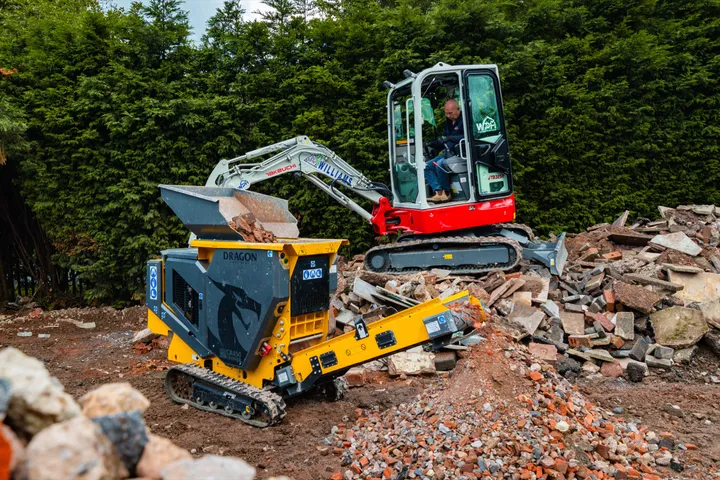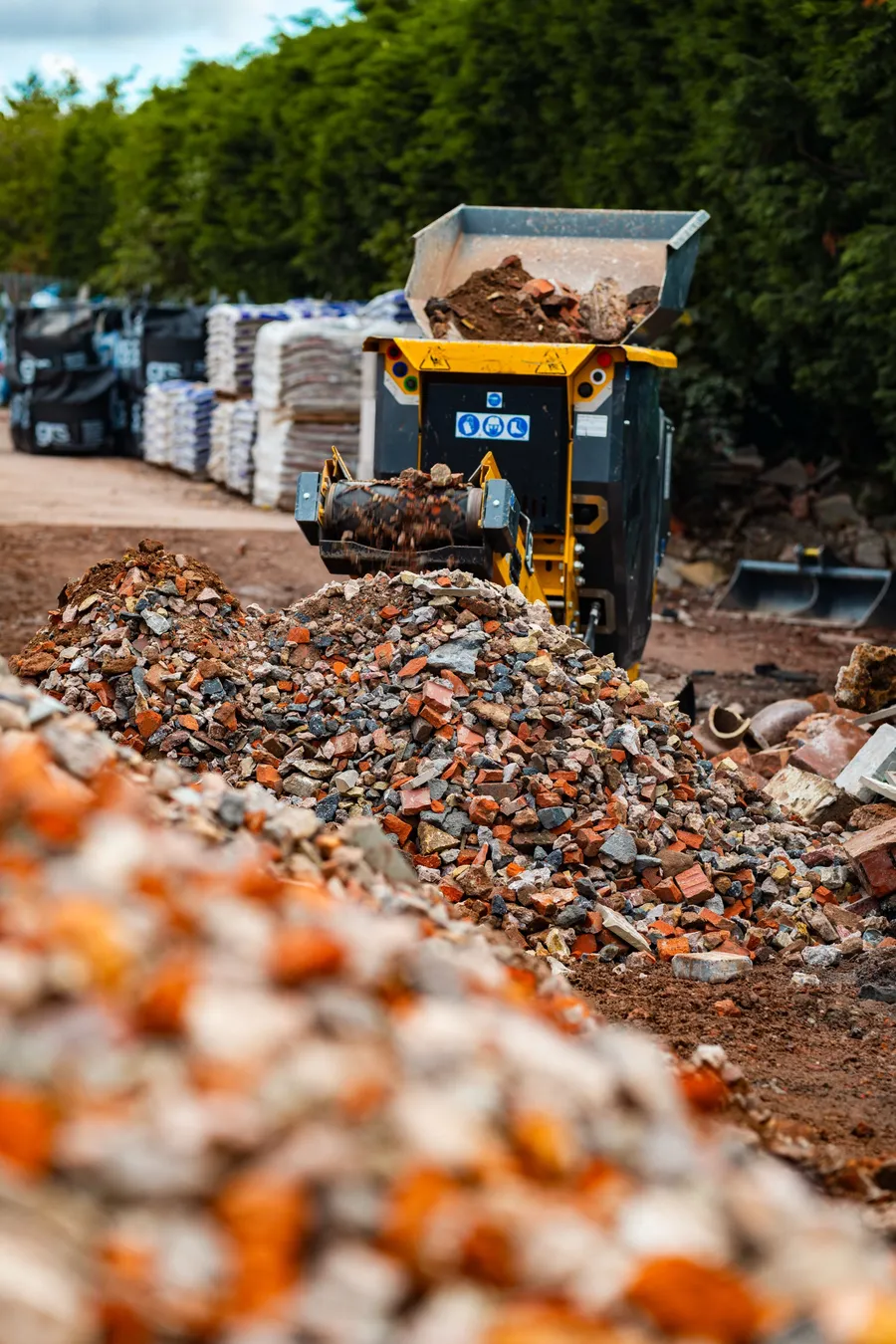
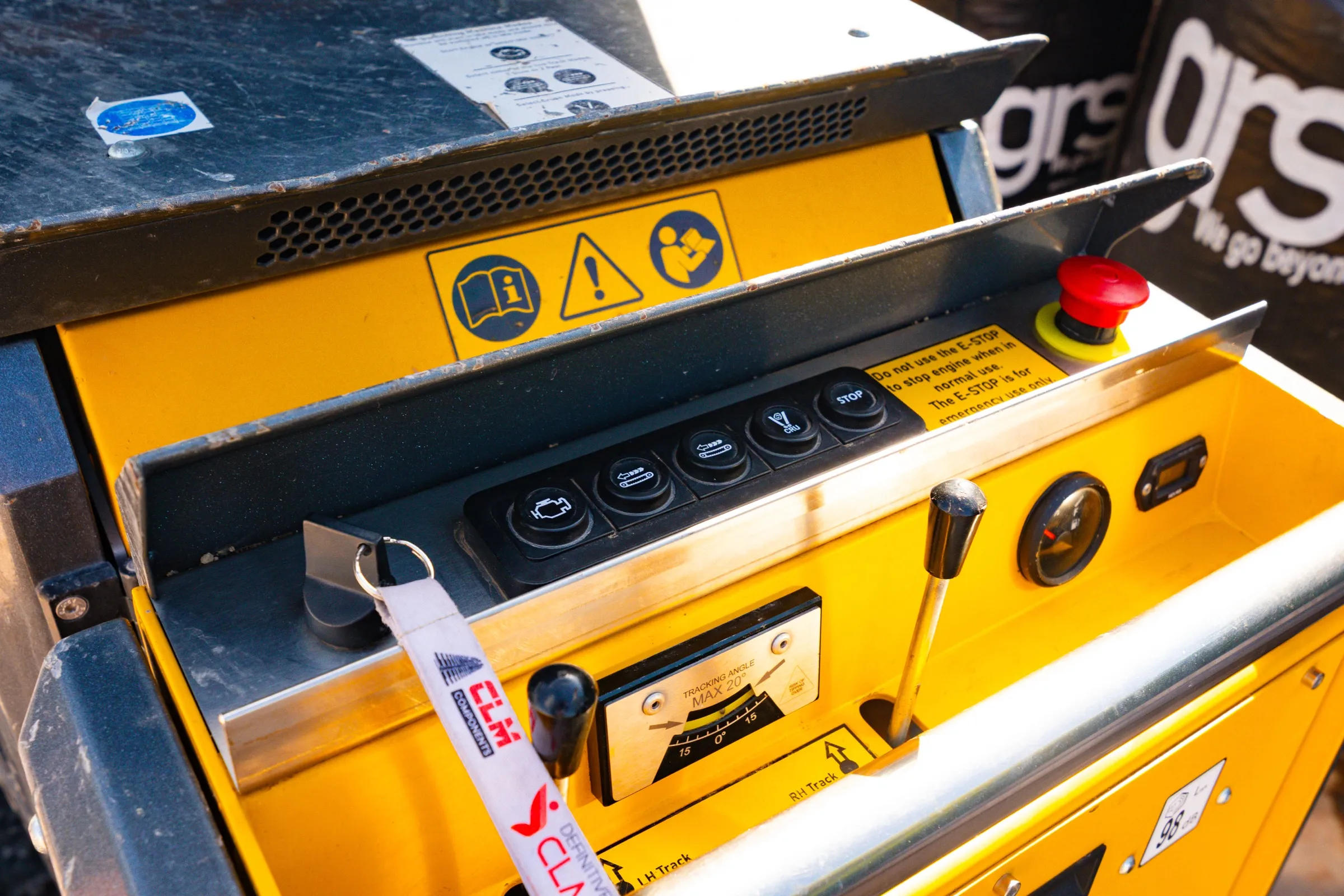
Yes, we bring the Dragon Equipment CR450 to Ellesmere and the surrounding parishes. The trip from Ford is roughly 19 miles, through Baschurch and then up the A528 by Cockshutt, which takes about 35 minutes towing. We unload it, show you how it works safely and fetch it again once you've finished.
- From our yard
- About 19 miles · 35 mins
- Route
- A458 and B4397 via Baschurch, then the A528
- Council
- Shropshire Council
- Waste regulator
- Environment Agency
What makes a hired crusher useful in Ellesmere?
Ellesmere is a small town that has been getting bigger quickly. Its built-up area went from 3,686 people in 2011 to 4,275 at the 2021 census, a rise of about 16%. That growth has been squeezed into a place with a mere on one side, a canal along the other and flood-prone land to the south and west, so there is not much spare ground for stockpiling rubble or parking a row of skips.
A tracked crusher that is under a metre wide changes the sums. When an old drive, a garage floor or a yard slab comes up, you break it, run it through the jaw and spread the result as a base layer on that plot. On a terrace off Scotland Street or a farm lane near Welshampton, one machine on a trailer is far easier to place than a convoy of wagons.
Which building eras make up Ellesmere's streets?
Plenty of them are pre-Victorian. The parish holds 106 listed buildings, and the largest group dates from the early 1800s, the years when the canal reached the town, alongside timber-framed cottages from the 1600s. Beech House, the Ellesmere Canal Company's office of 1806, is Grade II*. Valuation Office figures for the town and its fringe put roughly 30% of properties before 1900.
Around that core sit later layers. The same VOA data counts about 700 homes built between 1945 and 1972 and more than 1,600 since 1973. Recent estates include 112 homes south of The Hawthorns, Oakmere Ridge off the A495 with 107 more, 57 at Old Station Yard on Brownlow Road and the 23-home Ellesmere Wharf, finished in April 2024. Each era leaves its own drives, patios and garage bases to replace.
When will the marina and housing south of Canal Way be built?
The town's one big allocation is the land between Canal Way and the A495. Shropshire's SAMDev Plan earmarks it for 250 homes plus 18 hectares of leisure uses such as a hotel, marina, caravans and cabins. Outline consent was granted in December 2016. Since then a first detailed scheme for 99 homes fell away, and a variation now sets a deadline of December 2026 for the remaining reserved matters.
What is consented is the groundwork. Full permission covers a link road with a footway and cycleway from the Business Park roundabout to Canal Way, earthworks across the site and new flood land, including opening up the culverted Tetchill Brook. No homes had been built by March 2025. With the county's draft Local Plan withdrawn in July 2025, the 2015 allocation remains the basis for decisions here.
How do the Mere, the canal and wet ground affect a job here?
The planners list the constraints plainly: the Mere to the east and flood risk to the south and west. Any big scheme must also protect Cole Mere and the Fenns, Whixall and Bettisfield Mosses, which carry international wildlife designations. Closer to home, the Place Plan flags the Mere Culvert under the town and drainage to the canal as local flooding concerns, so check levels before you lower a yard.
Heritage matters too. The centre is a conservation area, and the canal yard by Beech House is a working Canal and River Trust depot with a forge, a dry dock and listed buildings. Work in those settings usually needs consent first. Where it goes ahead, a 970mm machine fits through gateways that a lorry cannot, and crushed rubble stays on site instead of crossing the narrow streets.
Where do Ellesmere's dairy farms come into it?
Historic England's study of farmsteads on the Shropshire and Cheshire plain draws a line from Ellesmere through Wem to Market Drayton. North of it is traditionally a dairying district, with heavy clay grazing for milk herds. The town's industry followed the cows: the large Grange Road works made milking systems for Fullwood Packo before Triang began turning it into Fullwood Business Park in 2024.
Milking means concrete: collecting yards, feed passages, silage clamps and the tracks between them. When a slab cracks or a clamp wall comes down, the pieces can be broken down beside the parlour and laid as base for the replacement or a field gateway. Some farms near Penley and Bettisfield sit over the border in Wales, and there the regulator is Natural Resources Wales rather than the Environment Agency.
What do people crush in Ellesmere?
Collecting yards and clamps
On the milk farms around Welshampton, Lyneal and Dudleston Heath, worn collecting-yard slabs and broken clamp floors can go through the jaw beside the shed and be spread as base for the new concrete or a muddy gateway.
Replacing a 1960s drive
Around 700 homes in and around the town date from 1945 to 1972. Their original drives and garage floors are now well past their best. Break one out, crush it to 40mm or so and use it under block paving.
Clearance on the Canal Way land
The link road and flood works south of the town are consented but houses are not yet built. Groundworkers clearing old hardstanding there can turn it into fill and sub-base on site rather than hauling it out past the wharf.
Old factory yards on Grange Road
The former Fullwood works is being split into business units. Tenants fitting out a unit or reworking the yard can turn damaged concrete into the bed for the new surface.
Do you need a permit to crush concrete in Ellesmere?
Crushing concrete, brick or tile with a machine is a regulated activity, even on your own site, and on a self-hire the person running the crusher is treated as the operator. Before you start, contact Shropshire Council. The council decides whether the job needs a mobile plant (Part B) permit, or whether it is small enough to register a T7 exemption with them instead.
Reusing the crushed material on the same site is normally covered by a U1 exemption, registered with the Environment Agency, which has charged for exemptions in England since July 2025. Keep asbestos, plastics, timber and metal out of the feed. We’re happy to talk it through when you book, but the council has the final say.
Where around Ellesmere do we deliver?
- Welshampton
- Lyneal
- Cockshutt
- Tetchill
- Dudleston Heath
- Dudleston
- Welsh Frankton
- Lower Frankton
- English Frankton
- Hordley
- Colemere
- Petton
- Bagley
- Elson
- Penley
- Overton-on-Dee