Yes, we deliver the Dragon Equipment CR450 self-hire crusher to Much Wenlock and the parishes along Wenlock Edge. Our yard at Ford is around 19 miles away via the A458 through Cressage, so it takes about half an hour with the trailer. Neil sets it down on site, shows you the controls and collects it when you have finished.
- From our yard
- About 19 miles · 30 mins
- Route
- A458 and A5 round Shrewsbury, then the A458 via Cressage
- Council
- Shropshire Council
- Waste regulator
- Environment Agency
Is a crusher worth bringing to a town as small as Much Wenlock?
The built-up area held just 1,765 people at the 2021 census, and close to two in five were 65 or over. At its heart is a medieval town that grew up around the priory, with timber-framed buildings and the Tudor Guildhall on narrow streets. The Victoria County History notes that every 20th-century estate went on the edges of town so the old street frontages survived. That leaves most hard-surface work out on the estates, and the lorries serving it still have to pass through the centre.
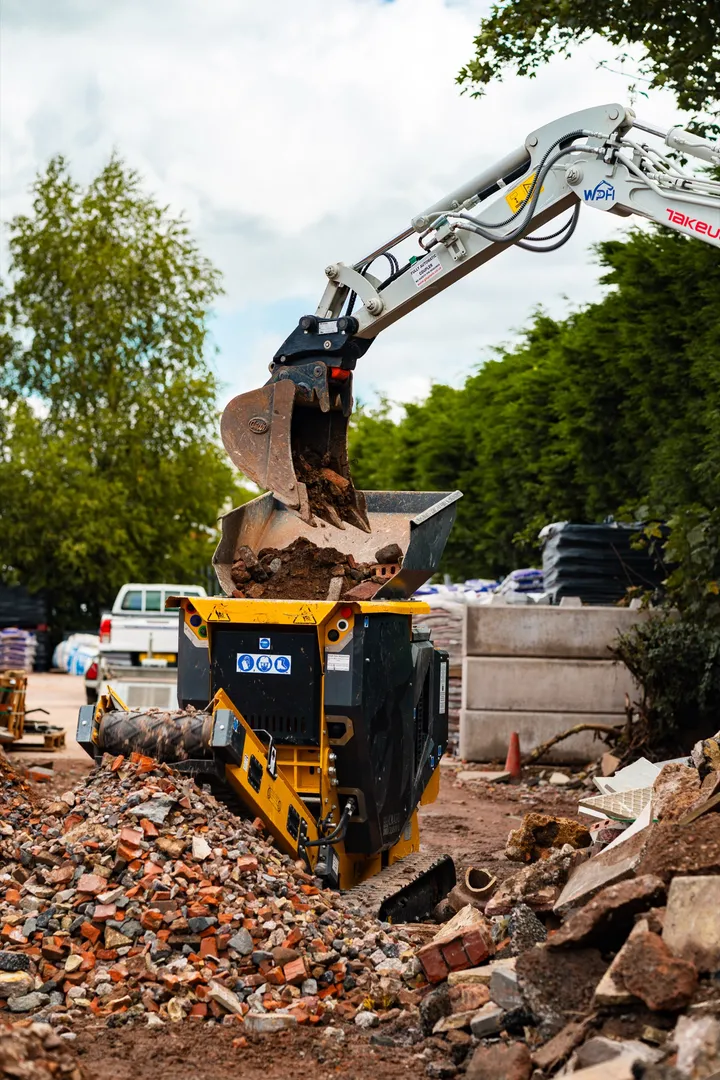
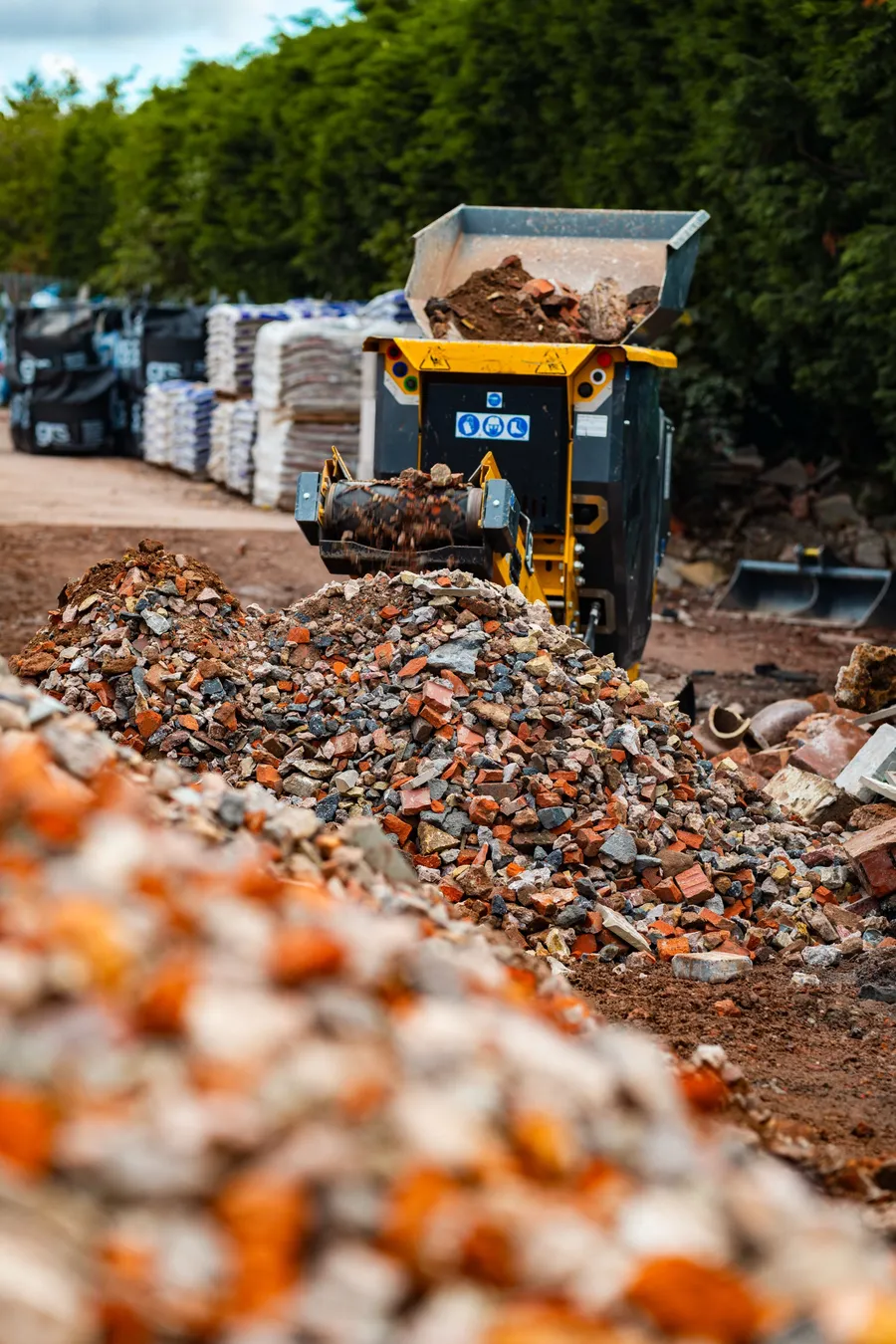
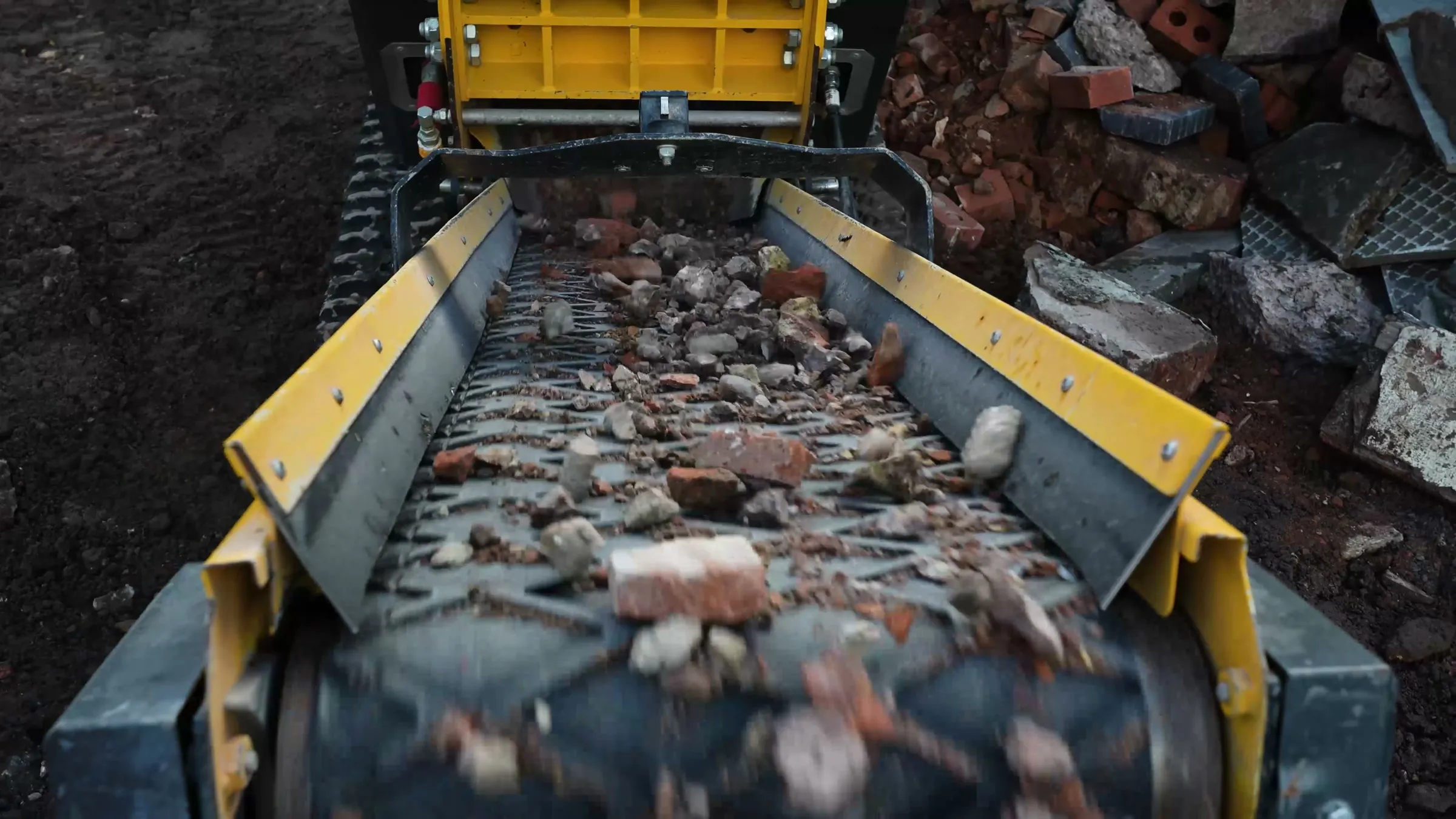
A self-hire crusher removes most of those trips. The CR450 is tracked, 1,450kg and 970mm wide, so it can be walked off the trailer and through a side gate into a back garden. A mini excavator feeds the jaw, the output can be set anywhere from 3 to 55mm, and the material stays on site to go straight back under the new drive, path or base.
What did the 20th century add to Much Wenlock's houses?
The first council houses went up at the Crescent in 1927, with 98 more by 1939, 38 finished in 1947 and 80 houses and flats completed between 1953 and 1964. Bridgnorth Rural District Council added 43 houses at High Causeway in 1972. Private building began in the early 1960s with Oakfield Park (59 houses) and Walton Hills (50), followed in the 1970s by Swan Meadow (26) and Sytche Close (13).
Detached homes make up about 46% of households in the neighbourhood area, well above the national share, and the town council counted 153 bungalows. The oldest of those estates have passed their sixtieth birthday. It means a steady supply of tired drives, garage slabs, patios and concrete paths, along with limestone and brick garden walls. All of it is the kind of clean, hard material a jaw crusher turns back into usable hardcore.
How much new building does the neighbourhood plan allow?
Shropshire's SAMDev plan makes no site allocations in Much Wenlock and leaves the strategy to the Neighbourhood Plan, which was first made in July 2014 with a figure of 130 homes to 2026. A reviewed plan for 2024 to 2038 passed examination in November 2025 and won 90% support at referendum in March 2026. It favours small sites and infill inside the development boundary, rural exception schemes of up to 20 homes, and no building on known flood zones.
The withdrawn draft Shropshire Local Plan had proposed 200 homes for the town, including up to 120 beside the primary school and Hunters Gate, but those figures fell with it in July 2025. Boningale Developments has since applied for up to 300 homes off Bridgnorth Road (26/00294/OUT). The town council opposes it and no decision had been reported by mid-2026. For now, most work is extensions, replacements and small plots.
What did the 2007 flood change for building work in town?
In 2007 around 64 properties reported flooding, and the electricity substation beside the Sytche Brook was swamped, cutting power to much of the town. Shropshire Council responded with a £2m scheme of two storage ponds, one on the Sytche Brook north west of town and one on the Shylte Brook to the south west. Together they hold 21,104 cubic metres and cut the risk to 171 properties. The work was finished in 2017.
Surface water is still a live issue. The council's Place Plan names runoff from the surrounding land and drainage that cannot cope in heavy rain, and the new Neighbourhood Plan wants land that could slow surface water kept free. If you are relaying a drive or yard, think about where the water goes. Crushed concrete can form the sub-base layer, and the jaw setting lets you choose the grade your installer asks for.
What does Wenlock Edge's quarrying past have to do with your rubble?
Wenlock Edge runs about 18 miles from Craven Arms towards Ironbridge, a narrow escarpment of 425-million-year-old reef limestone, and the National Trust owns 8 miles of it. Quarrying shaped the parish. Farley grew up beside the workings, and in 1841 its biggest trade was hauling stone by wagon to the Severn. At Presthope, old farmhouses were abandoned as the quarry face moved forward.
Lea Quarry now has a wood-chip business and a National Trust walk past its fossil-reef face, while the former Farley Quarry is the subject of plans for infill and restoration. Parts of the parish to the west and north lie in the Shropshire Hills National Landscape. In a place shaped by digging stone out, turning your own broken concrete into sub-base saves both the tip run and a delivery of fresh aggregate.
What do people crush in Much Wenlock?
Drives on the 1960s and 1970s estates
Oakfield Park, Walton Hills, Swan Meadow and Sytche Close are now half a century old. Break out the original drive or garage base, crush it and use it as the sub-base for the replacement, with no skip parked in the street.
Relaying yards with drainage in mind
In a town with known surface-water problems, many owners rebuild drives and yards to shed water better. Crushed concrete graded on the CR450 can form the sub-base layer, cutting both disposal and stone costs.
Farmyards around Bourton and Shipton
Mixed farms below Wenlock Edge and out towards Bourton, Easthope and Shipton have old yard slabs and broken concrete aprons. Processed on the holding, that concrete becomes hardcore for lanes, field entrances and standing areas.
Small plots inside the boundary
The Neighbourhood Plan backs infill and small sites rather than big estates. Clearing a plot of old outbuildings, slabs and footings gives you material to crush and reuse as fill and sub-base on the same site.
Do you need a permit to crush concrete in Much Wenlock?
Crushing concrete, brick or tile with a machine is a regulated activity, even on your own site, and on a self-hire the person running the crusher is treated as the operator. Before you start, contact Shropshire Council. The council decides whether the job needs a mobile plant (Part B) permit, or whether it is small enough to register a T7 exemption with them instead.
Reusing the crushed material on the same site is normally covered by a U1 exemption, registered with the Environment Agency, which has charged for exemptions in England since July 2025. Keep asbestos, plastics, timber and metal out of the feed. We’re happy to talk it through when you book, but the council has the final say.
Where around Much Wenlock do we deliver?
- Farley
- Homer
- Bourton
- Presthope
- Stretton Westwood
- Callaughton
- Buildwas
- Cressage
- Sheinton
- Harley
- Kenley
- Church Preen
- Hughley
- Easthope
- Shipton